
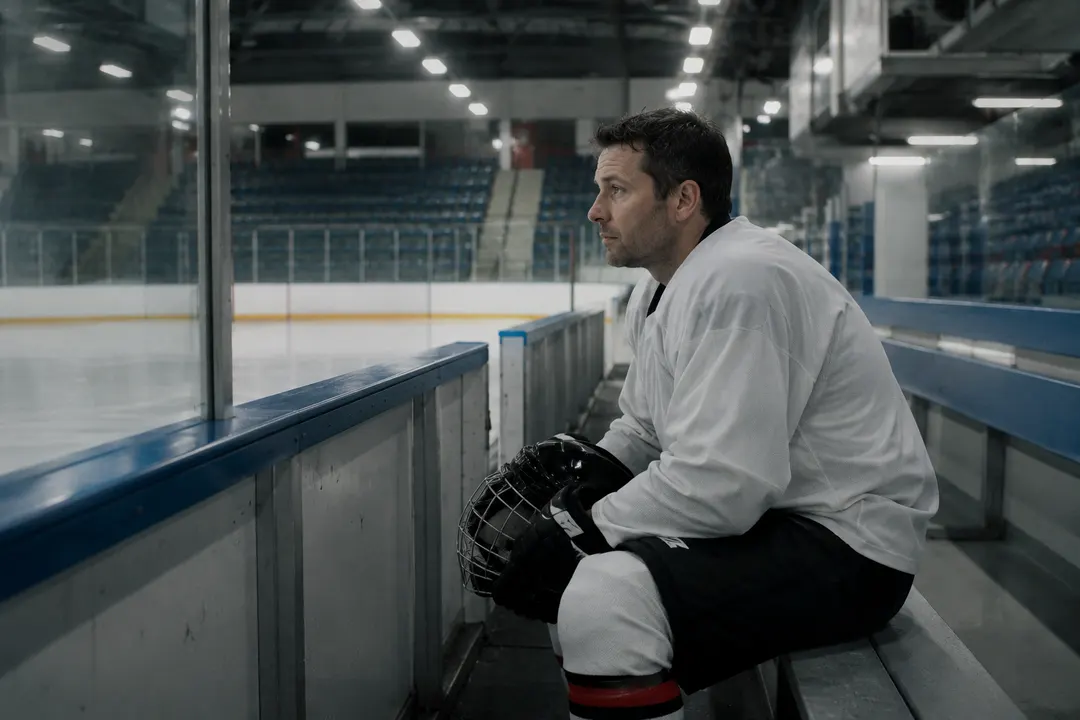
Imagine the best hockey player you know. They’ve got the skill. The instincts. The heart for it.
Now imagine putting them on the ice with a cracked stick. Dull skates. Gear that doesn’t quite fit.
They can still play. They might even push themselves harder than everyone else, because they know what they’re capable of.
But every stride is just a little harder than it should be. Every pass is slightly off. They’re working twice as hard to do what used to be easy.
And eventually, if it goes on long enough, something else starts happening.
They start second-guessing themselves.
They start wondering if they’re actually any good at all.
That’s what life can feel like when your emotional system is working against you instead of for you.
You’re still showing up. Still trying. Still doing what good, capable people do.
But every play takes more than it should. Every decision is slightly off. Every morning, you’ve already used up more than you should have just to get out the door.
It’s not that you’re not capable. You are.
The equipment isn’t working with you the way it should.
Why Trying Harder Isn’t Reaching It
The instinct, eventually, is to push harder. More discipline. More structure. More positive self-talk. More grit. The personal-development industry is enormous, and most of what it offers is well-intentioned. Some of it even helps in the short run.
But there’s a particular kind of person this isn’t reaching. The capable one. The one who already has good habits. The one who’s read the books, done the work, made the changes, and is still finding life harder than it should be.
Discipline is operating at the wrong level.
The conscious mind - the part that picks the next habit, the next system, the next push - accounts for about 5% of your total mental activity. The other 95% is the subconscious, and it has its own read on the situation.
For a lot of capable, conscientious people, that 95% is running a program that sounds something like: Everything has to be earned. You can’t trust that things will go well. If you stop pushing, you’ll fall behind. Other people get to flow; you have to grind.
That’s not a thought you walk around with. It runs in the background, faithfully shaping decisions and reactions and the actual feel of your days.
And no amount of new strategies updates it. The strategies are operating on top. The program is still running underneath.
The capable person tries harder. The equipment stays broken.
What Actually Updates the Equipment
I came across Inner Influencing as someone who’d tried enough things to know what a plateau felt like - the point where something has helped as much as it’s going to, and the underlying pattern is still right there. The sense that life was harder than it should be was one of those things for me. So was the quiet conviction that the only answer was to keep pushing.
What I found in Inner Influencing was something that operated on completely different logic. Different enough that I went on to train as a Master Practitioner, and it’s now the foundation of the work I do with clients.
Inner Influencing is an established methodology for communicating directly with the subconscious mind. A direct instruction, structured in a specific way the subconscious can receive without resistance. The pattern doesn’t have to be analyzed or understood to be updated. It just needs the right signal.
That signal comes through a carefully worded statement using a trigger phrase - "Purple Cow" - that’s deliberately unusual. The oddness is functional: it cuts through habitual mental processing and tells the subconscious that what’s coming is a direct instruction, not another thought to file away. One statement. Said once. No repetition required.
Try It for Yourself
Read each statement below slowly - out loud if you can. Say it once, then stop. Let a moment of quiet follow before moving to the next.
Notice whatever comes, even something small. A small loosening. A breath that goes a little deeper. A sense, even faint, that something just settled into place.
Statement 1 · The Surface Pattern
“Subconscious, when I say Purple Cow, you will get rid of all the ways I make life harder than it has to be by overworking, overpushing, and overcompensating for emotional weight I shouldn’t have to carry, and keep me free from that from now on, and do this in a way that is natural, easy, instant and graceful.”
“Purple Cow.”
Say it once. Then pause and notice.
Statement 2 · The Hidden Layer
“Subconscious, when I say Purple Cow, you will get rid of any belief that everything has to be earned, that I cannot trust things to go well, or that struggle is the price of being a capable person, and keep me free from that from now on, and do this in a way that is natural, easy, instant and graceful.”
“Purple Cow.”
Say it once. Take a breath. Let it settle.
Statement 3 · Opening the Positive
“Subconscious, when I say Purple Cow, you will make it easy for me to use my real abilities without internal friction, to play with full equipment, and to find that what I’m capable of becomes available to me more naturally, and keep me free from that from now on, and do this in a way that is natural, easy, instant and graceful.”
“Purple Cow.”
Say it once. Then simply rest for a moment.
What Just Happened
Whatever you noticed, even something faint, even just a moment where the friction wasn’t quite as solid - that was your subconscious receiving an instruction at the level where the pattern is held.
It doesn’t usually arrive with drama. Sometimes it’s quiet. A small straightening. A play that goes a little easier than it should have.
What you just experienced is just the beginning of how Inner Influencing works. The deeper practice reaches the older layers - the early instructions about effort and worth, the inherited beliefs about what’s required for life to go well, the patterns that have been running long enough to feel like just the way you are.
The free Inner Influencing Discovery Kit takes you further into the practice, explains the science behind why it works, and opens the door to that deeper clearing.
The capable person with broken equipment isn’t broken. The equipment is.
And the equipment can be updated.